Noon Witch Folklore
Slavic myth behind Scarlet Deer Inn's dread
Noon Witch Folklore in Scarlet Deer Inn
Scarlet Deer Inn draws on Slavic folklore, and the Noon Witch is the mythic center of its late dread. This page separates cultural background from game spoilers where possible, then labels plot connections clearly.
Characters: Characters. Spoilers: Ending Explained. Gameplay finale: Complete Ending.
Who the Noon Witch is in folklore
In Czech and broader Slavic tradition, the Noon Witch (often associated with Polednice / Lady Midday) is linked to the dangerous stillness of midday — heat, fieldwork, sudden illness, and threats especially frightening in stories told to keep children and workers within safe rhythms. She is not a Halloween cosplay default; she is a regional fear about thresholds in ordinary daylight.
Scarlet Deer Inn’s Czech creative roots (Attu Games) make this reference feel native rather than touristy.
Why midday myth fits a village inn story
The game begins in errands, cakes, church talk, oak shade — daylight social life. Folklore that says “danger can arrive in the ordinary day” fits better than a generic coffin-and-castle template. Father Johannes’s church scene starts translating communal fear into words before the pit makes fear spatial.
Village framing: Village, Inn NPCs.
Motifs you will recognize in-game
- Children at risk — Kuba and Bara’s centrality
- Domestic objects charged with fear — Horace, rag doll, shepherd’s flute
- Light versus harmful presence — torch and braziers as survival grammar
- Ordinary labor turning uncanny — Karel’s apiary path
- Stylized, not pornographic, violence — embroidered animation holding mature subject matter
Toys: Toys & Collectibles. Torch: Use the Torch.
What the game adapts vs invents
Adaptation: child-threat folklore, village moral language, dread attached to familiar spaces.
Invention (game-specific): platforming labyrinth rules, light-chase creature design, exact narrative sequence through Karel’s cellar and underground escape.
Do not treat every cave mechanic as ancient myth. Some of it is modern narrative-platformer craft published with Aurakenn Games for a 2026 audience.
Spoiler-labeled plot connection
Spoilers: In Scarlet Deer Inn’s story resolution, the Noon Witch takes Kuba and Bara. Elise’s escape with Horace preserves a child-world object without reversing the taking. That is why folklore context matters: the ending is not random cruelty; it is mythic pattern applied to characters you served cakes beside.
Full discussion: Ending Explained.
How to use folklore while playing
- Before the ending: let church and village dialogue plant questions
- During underground: notice how toys feel like offerings or memories under threat
- After ending: read deeper folklore if you want cultural grounding, not as a checklist to “solve” grief
Sensitive-theme note
Because Noon Witch stories often involve harm to children, the game includes mature themes. If that is a hard boundary, read Who Should Play before the apiary.
Folklore rabbit holes worth avoiding
You do not need every regional variant catalog to understand the game. Avoid random AI myth dumps that mix deities across cultures. Stick to Lady Midday / Polednice-adjacent readings and what the game itself stages.
Pair this page with craft appreciation
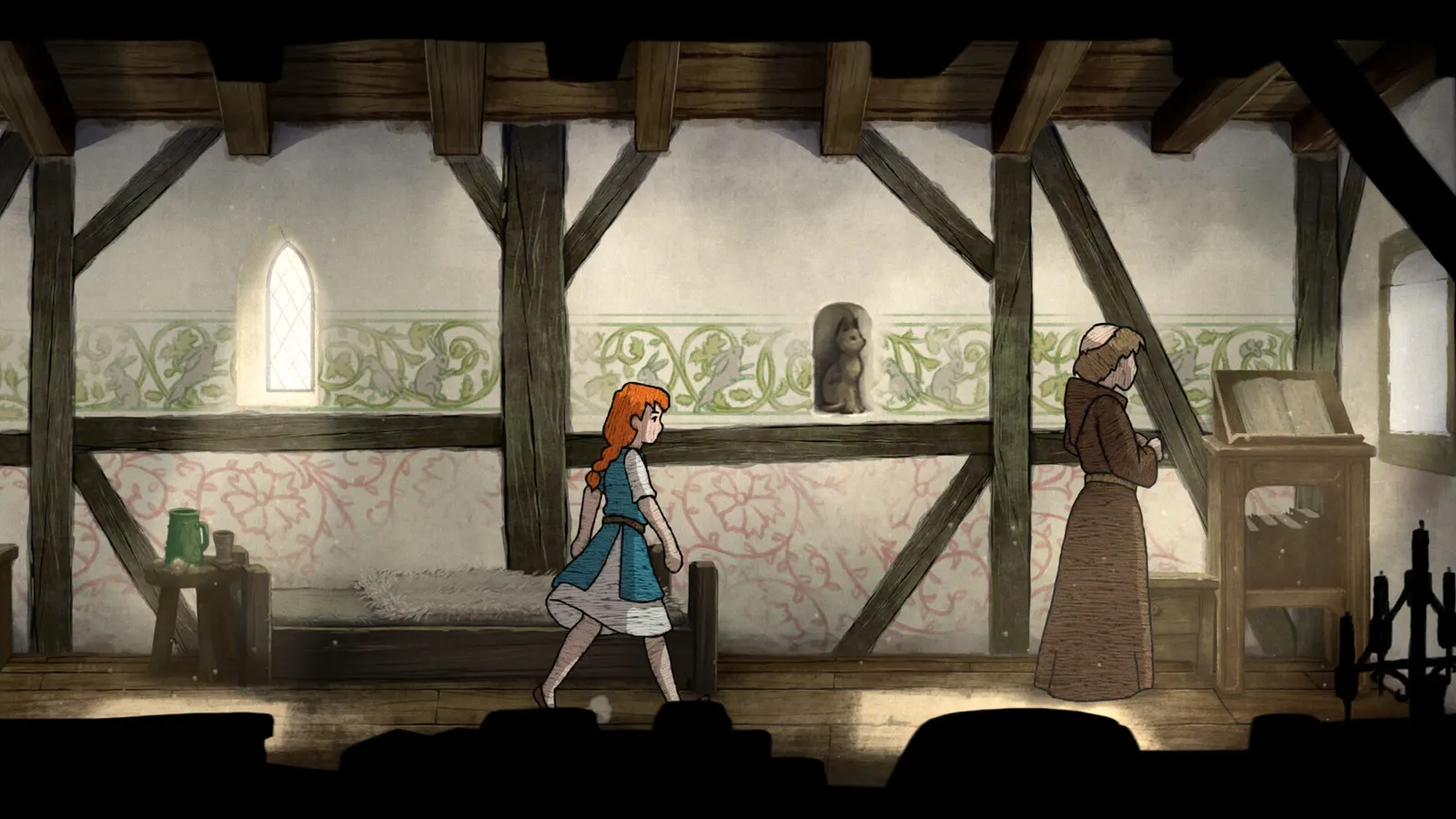
Attu Games’ hand-painted backgrounds and embroidered characters make folklore feel tactile. Myth is not only told; it is sewn and brushed into spaces you walk. Critical take: Full Review.
The Noon Witch in Scarlet Deer Inn is daylight fear surviving into painted night. Once you hear that, the village’s warmth reads as the first half of a warning.
Daylight horror versus dungeon horror
Lady Midday traditions scare because noon is supposed to be safe working light. Scarlet Deer Inn borrows that betrayal: hospitality spaces and errands are not armor. The underground makes the fear architectural, but the myth’s sting is that ordinary hours were never guaranteed.
Pastoral objects under threat
A shepherd’s flute in a toy list is not random rustic flavor. Pastoral/childhood sound sits opposite a witch who disrupts safe rhythms. Whether or not a puzzle “uses” the flute as a key, the symbol works.
Reading church scenes mythically
Father Johannes is not there to give a Wikipedia speech. He stages how a community speaks about danger — cautiously, piously, incompletely. Players receive myth through social voice before encyclopedia voice.
Respectful curiosity
If you research Polednice further, prefer reputable folklore summaries over shock blogs. The game already handles mature subject matter; you do not need graphic retellings to understand why Attu Games reached for this figure.
Bring it back to play
Folklore knowledge should improve attention, not replace torch skill. When you return to Caves, let myth deepen dread while braziers still get lit on time.
Frequently Asked Questions
Quick answers tied to this page.
Is the Noon Witch from Slavic folklore?
Yes. She aligns with Polednice / Lady Midday traditions associated with midday danger and child-related fear stories.
Do I need folklore knowledge to finish the game?
No. It deepens appreciation; walkthroughs and torch skills finish the game.
Does this page spoil the ending?
The labeled section does. Earlier sections stay more contextual.
Why are toys relevant to the witch theme?
Childhood objects make the threat to Kuba and Bara tangible before the finale names it.
Is every cave monster the Noon Witch?
No. Treat the light-chase creature and labyrinth hazards as game systems within a folklore-driven story.
Where do I read the plot ending plainly?
Ending Explained.