Scarlet Deer Inn Characters
The people inside the embroidered nightmare
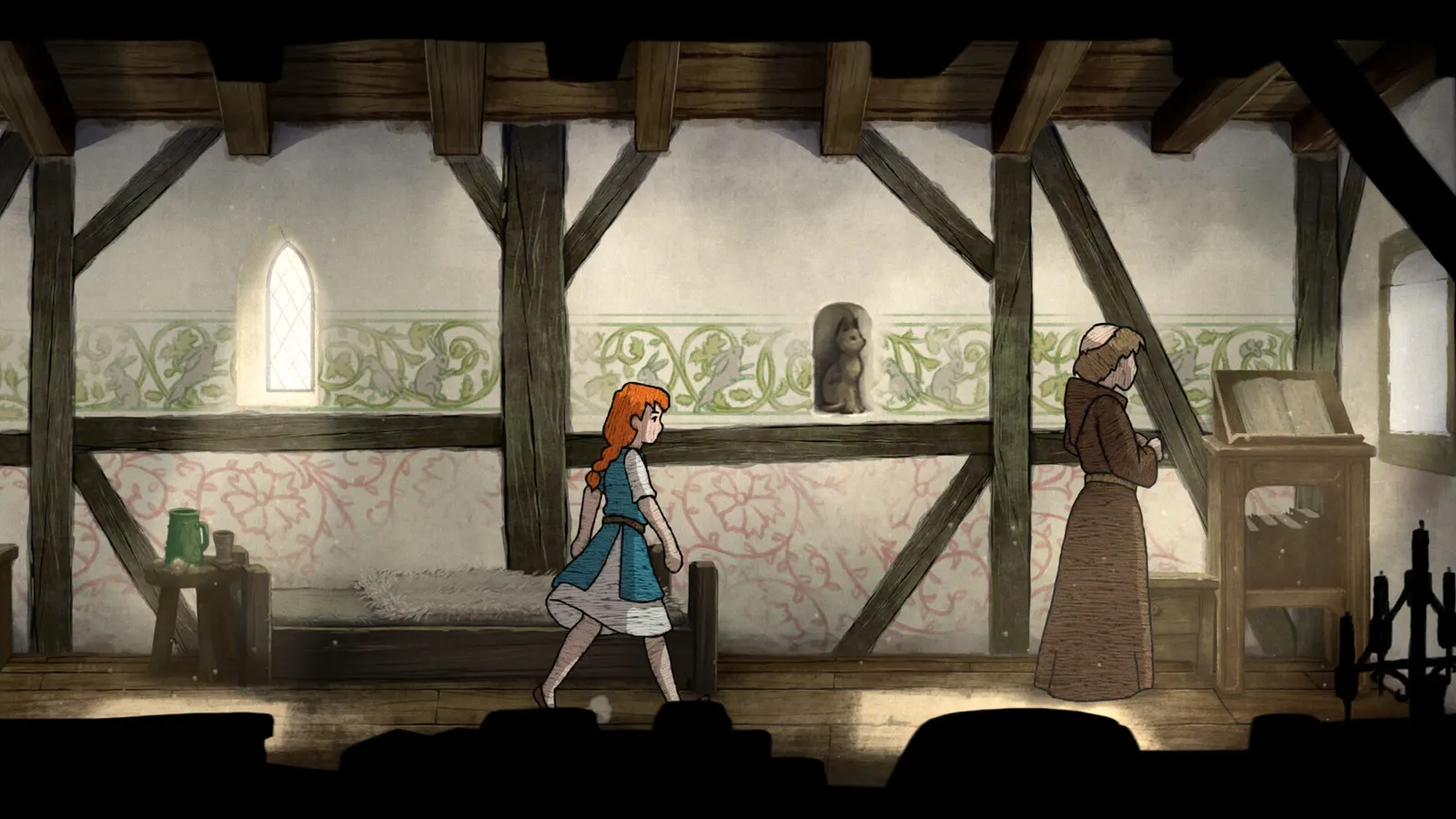
Scarlet Deer Inn Characters
Scarlet Deer Inn works because its cast is small enough to remember and specific enough to hurt. Attu Games (Czech husband-and-wife team), publishing with Aurakenn Games, builds a village you can hold in your head — then spends that intimacy underground.
Location directory flavor: Inn NPCs. Lore: Noon Witch folklore. Spoilers: Ending Explained.
Elise
Elise is a mother of two and the player’s vessel. She is competent in domestic space: errands, deliveries, listening. The game repeatedly asks whether that competence can survive a world that stops negotiating. Her torch is both tool and metaphor — a parent trying to push darkness back from children’s paths.
Play systems that express her: How to Play, Torch.
Kuba
Kuba crystallizes the opening’s care mission through Horace, the toy horse. He is not “the tutorial child”; he is the first thesis statement. When toys recur later (rag doll, shepherd’s flute), they rhyme with Kuba’s need.
Bara
Bara completes the parental stake. Even when she has fewer errand verbs than Kuba, her presence charges every childhood object you pick up. Late story consequences around the children are discussed on spoiler pages.
Dorota
Dorota is social infrastructure. She keeps Elise moving through the village and teaches the player that help is a loop, not a cutscene. Characters like Dorota make the inn feel like a workplace embedded in community.
Karel
Karel begins as a cake recipient and becomes the hinge into apiary/cellar horror. He matters structurally: without a trusted local destination, the pit fall would feel arbitrary. Walkthrough: Karel’s Apiary.
Otto and Lada
Otto and Lada broaden the village beyond a single questgiver. They prevent the opening from becoming a two-NPC hallway. Functionally they complete the cake triangle; thematically they say “many lives share this place.”
Father Johannes
Father Johannes voices communal interpretation — faith, fear, folklore adjacency — before monsters need to appear. Listen for how the village names danger. That naming prepares the Noon Witch without requiring a lecture.
The Noon Witch (antagonistic folklore presence)
The Noon Witch is less a roommate NPC and more a mythic pressure that becomes plot fact. She is the folkloric engine behind late tragedies involving Kuba and Bara. Read the dedicated folklore page for cultural context, and the ending pages for plot specifics.
Hostile underground presence
The light-chase creature and related threats are experiential characters: they teach rules (light, routing) while embodying the inn’s inverted world. Survive them with chase and shortcuts literacy.
Relationships map (low spoilers)
- Elise ↔ children: care and fear
- Elise ↔ Dorota/Otto/Lada: community labor
- Elise ↔ Karel: descent bridge
- Elise ↔ Father Johannes: moral language
- Children ↔ toys: vulnerability made portable
- Family ↔ Noon Witch: folklore violation of home
Why the cast stays small
A larger RPG party would dilute the embroidered intimacy. Scarlet Deer Inn wants you to remember faces when the caves try to replace them with corridors. That design choice supports the mature themes (stylized violence, child loss) without needing a massive speaking roster.
Suggested reading while meeting people
- Meet them in-game first
- Use this page to organize names
- Use Village to place them
- Only then open ending spoilers
Characters are the save data of your conscience in this game. Keep them close.
Character design through animation
Embroidered motion makes gestures feel crafted. Watch how Elise carries urgency differently in errands versus chase stance — the art is performing character, not only decorating it.
Moral triangulation
Dorota asks for help. Father Johannes frames fear. Karel receives cake and later becomes the descent hinge. Together they triangulate Elise between labor, faith language, and proximity to harm.
Children and player complicity
By helping Kuba early, you practice being useful to children. The finale’s folklore cruelty hits players who did the homework of care. That is not cheap shock; it is structured empathy.
Antagonism without a monologue dump
The Noon Witch does not need constant screen time to dominate theme. Folklore presence can be atmospheric until it becomes plot fact. See Noon Witch folklore.
Cast reread order after finishing
Characters page → Village → Ending Explained. That order turns directory data into tragedy literacy without confusing first-time players who are still delivering cakes.
Frequently Asked Questions
Quick answers tied to this page.
Who do I play as?
Elise, mother of two and the inn's central adult protagonist.
Who is Horace connected to?
Kuba, via the toy horse request in the opening village.
Is the Noon Witch a villager NPC?
Treat her as a folkloric antagonistic presence that becomes central to late story stakes.
Which characters are tied to cakes?
Karel, Otto, and Lada.
Where can I find ending spoilers about the children?
Ending Explained and How to Complete the Ending.
Are there party companions underground?
Underground play isolates Elise among puzzles, threats, and memories of the village cast.